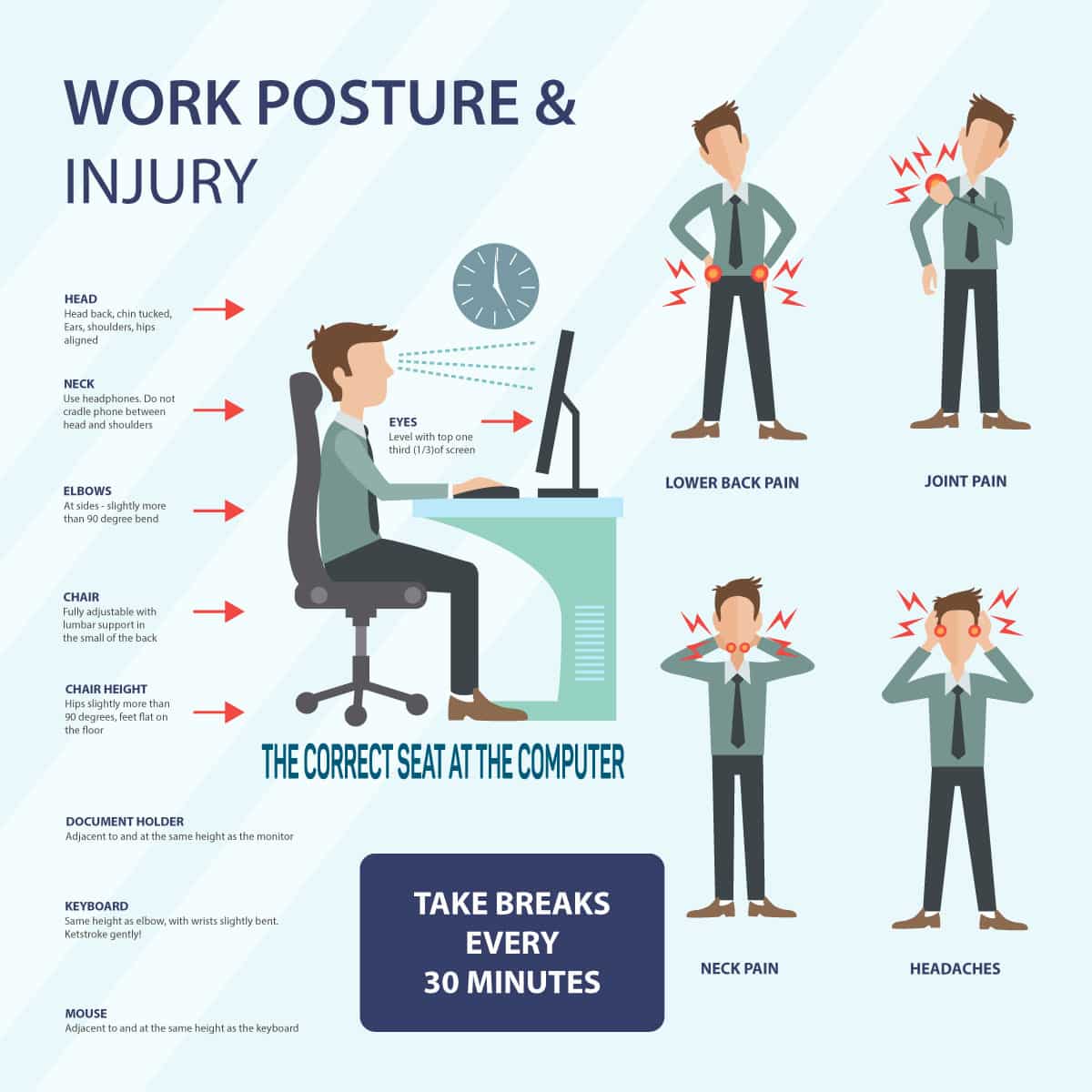
Posture Correction for Office Workers: How to Prevent Pain and Improve Your Workday
Sitting for long periods at a desk can be a recipe for disaster when it comes to your health. Back pain, neck stiffness, and tight shoulders are just a few of the consequences of poor posture that many office workers face every day.
The Dangers of Poor Posture
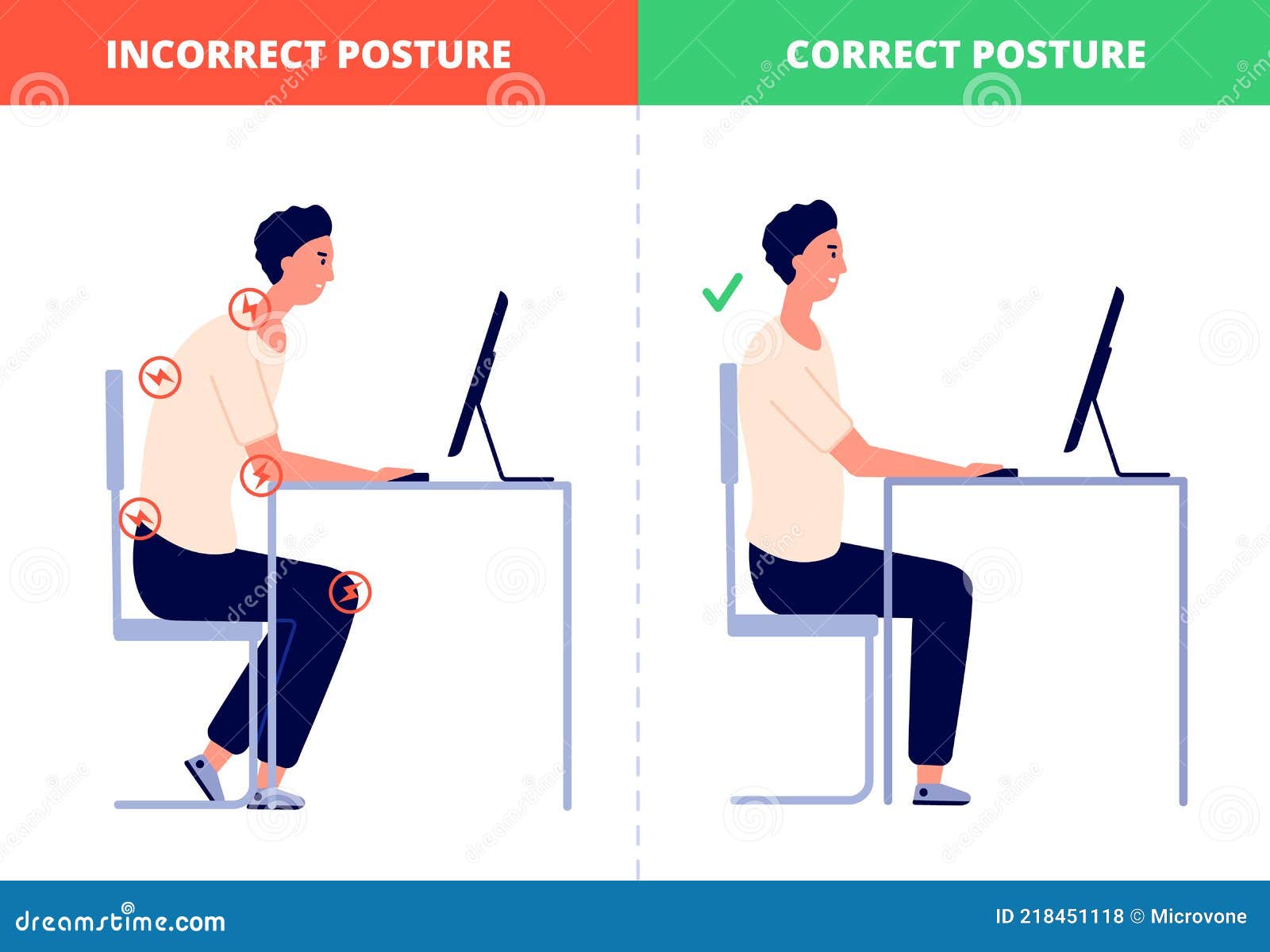
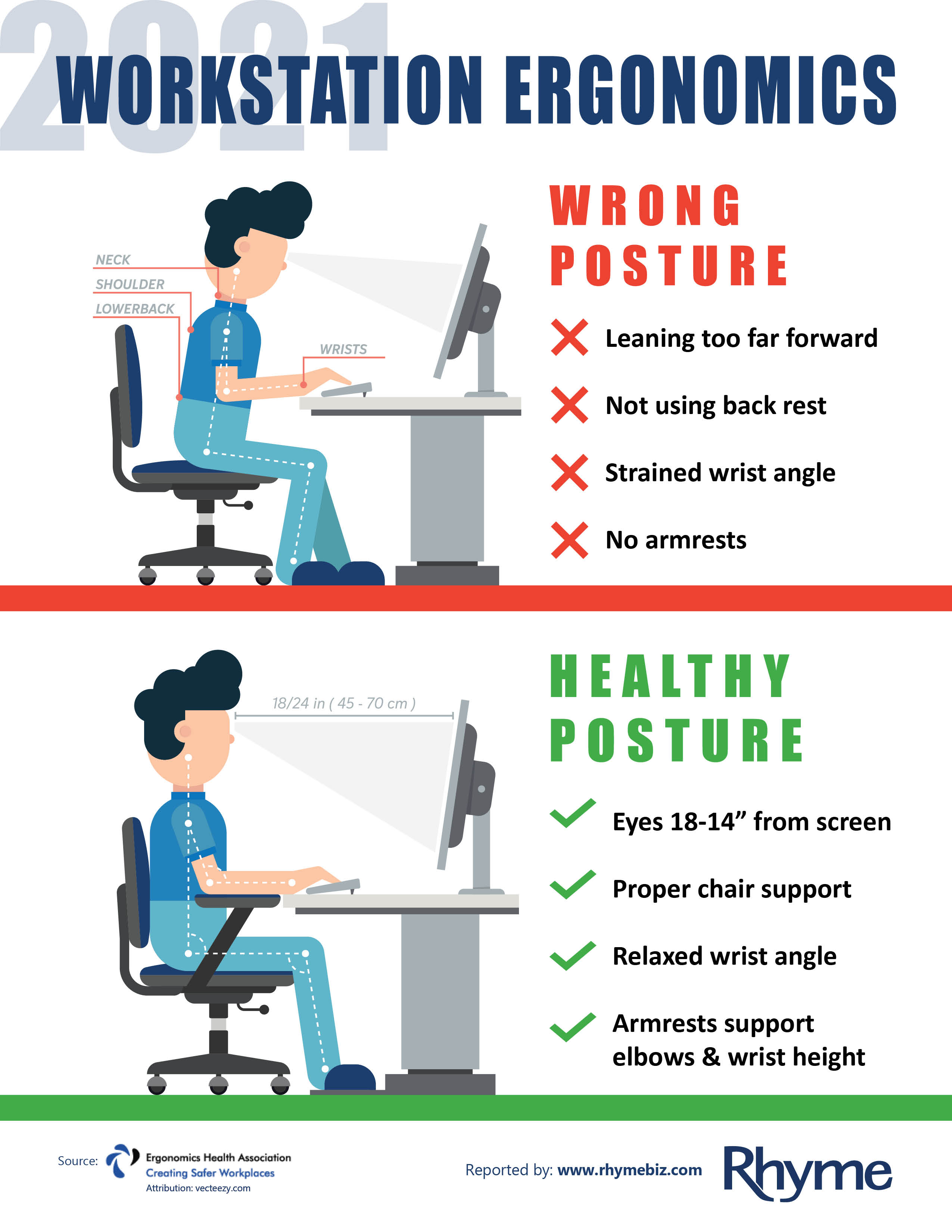
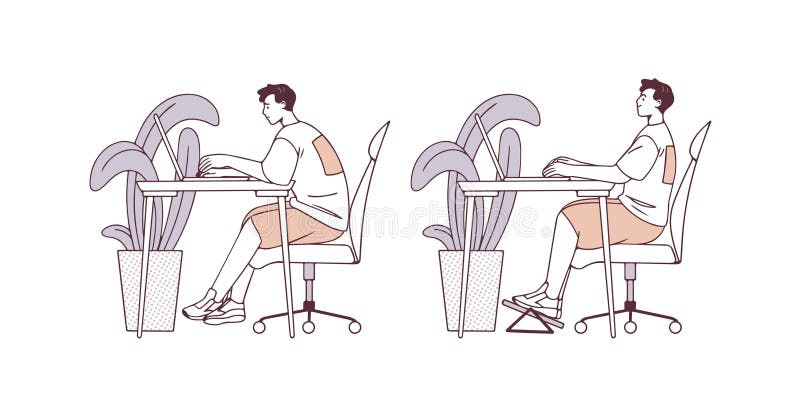
When you slouch or slump at your desk, you're putting your spine and muscles under undue stress. This can lead to a range of problems, from mild discomfort to chronic pain and even long-term spinal issues.
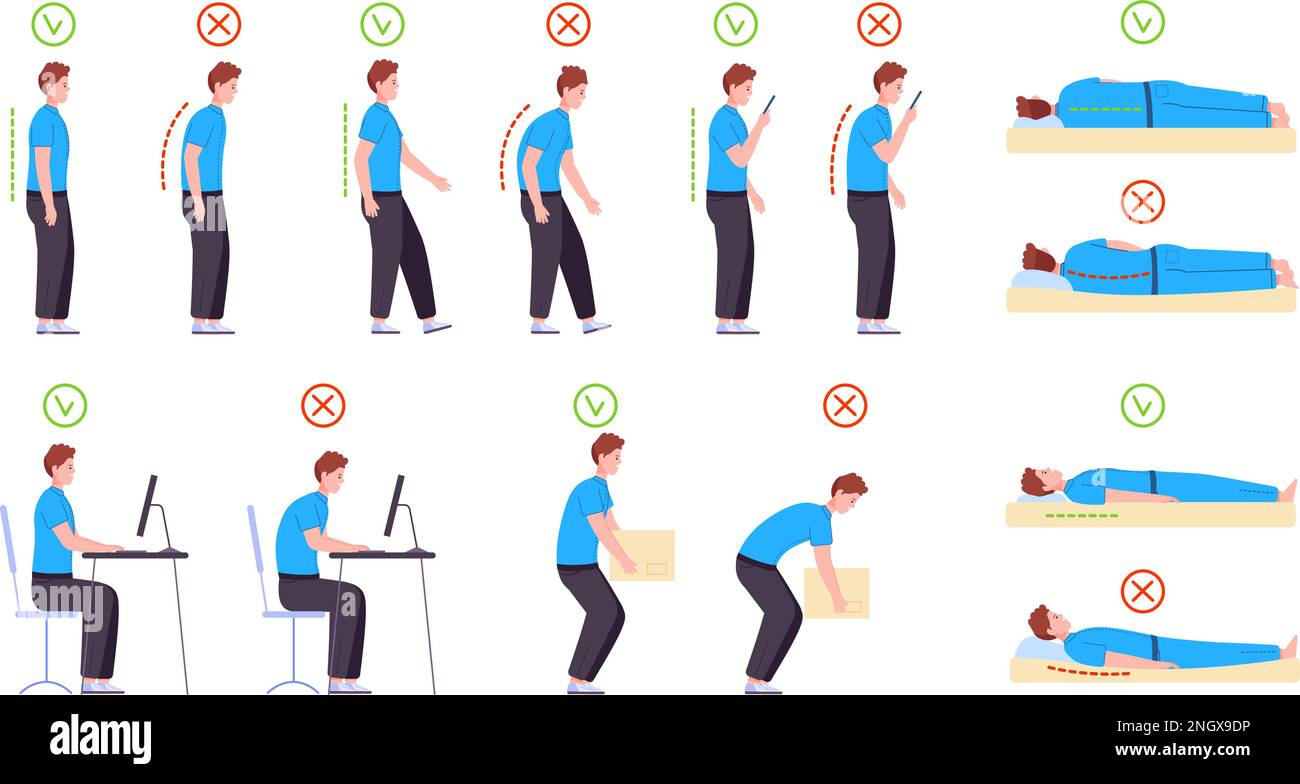
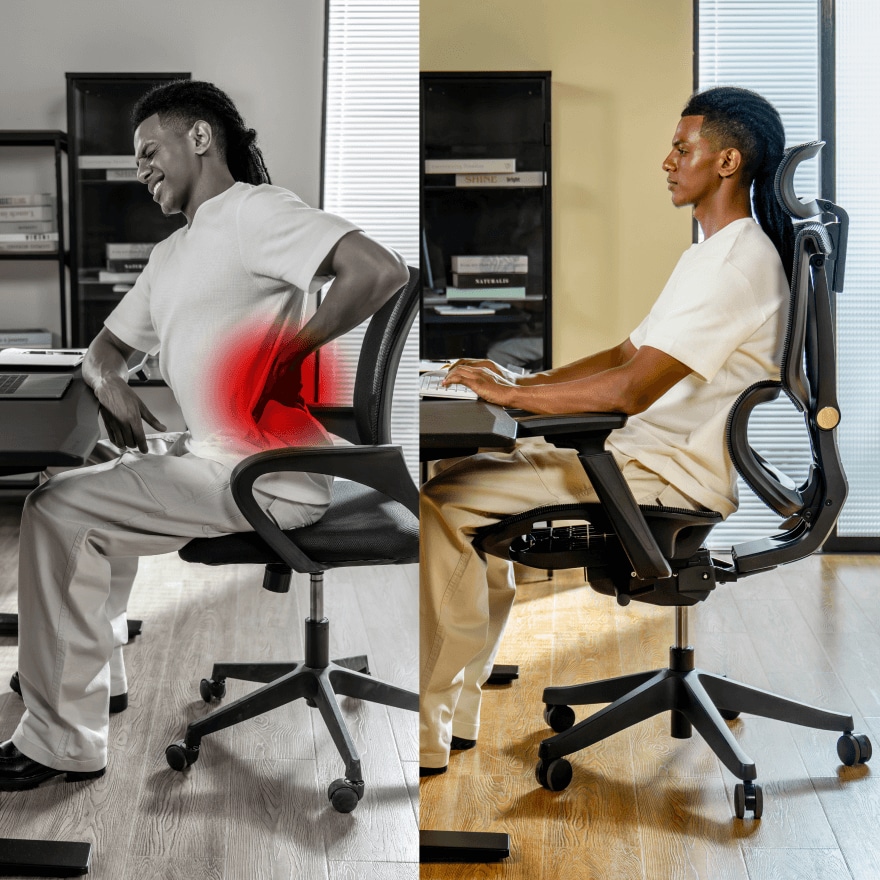
- Back pain:** Your back supports your entire body, and poor posture can put unnecessary strain on your lower back.
- Neck stiffness:** Slouching can lead to shortening of the neck muscles, causing stiffness and discomfort.
- Tight shoulders:** Good posture relies on strong, relaxed shoulder muscles. When they're tight, you may experience pain and stiffness in your shoulders.
- Headaches and migraines:** Forward head posture can lead to headaches and migraines due to strain on the neck and shoulder muscles.
- Reduced productivity:** Poor posture can affect your focus and concentration, making it challenging to complete tasks efficiently.
Simple Posture Correction Tips for Office Workers
Here are some quick adjustments you can make to your daily routine to improve your posture:
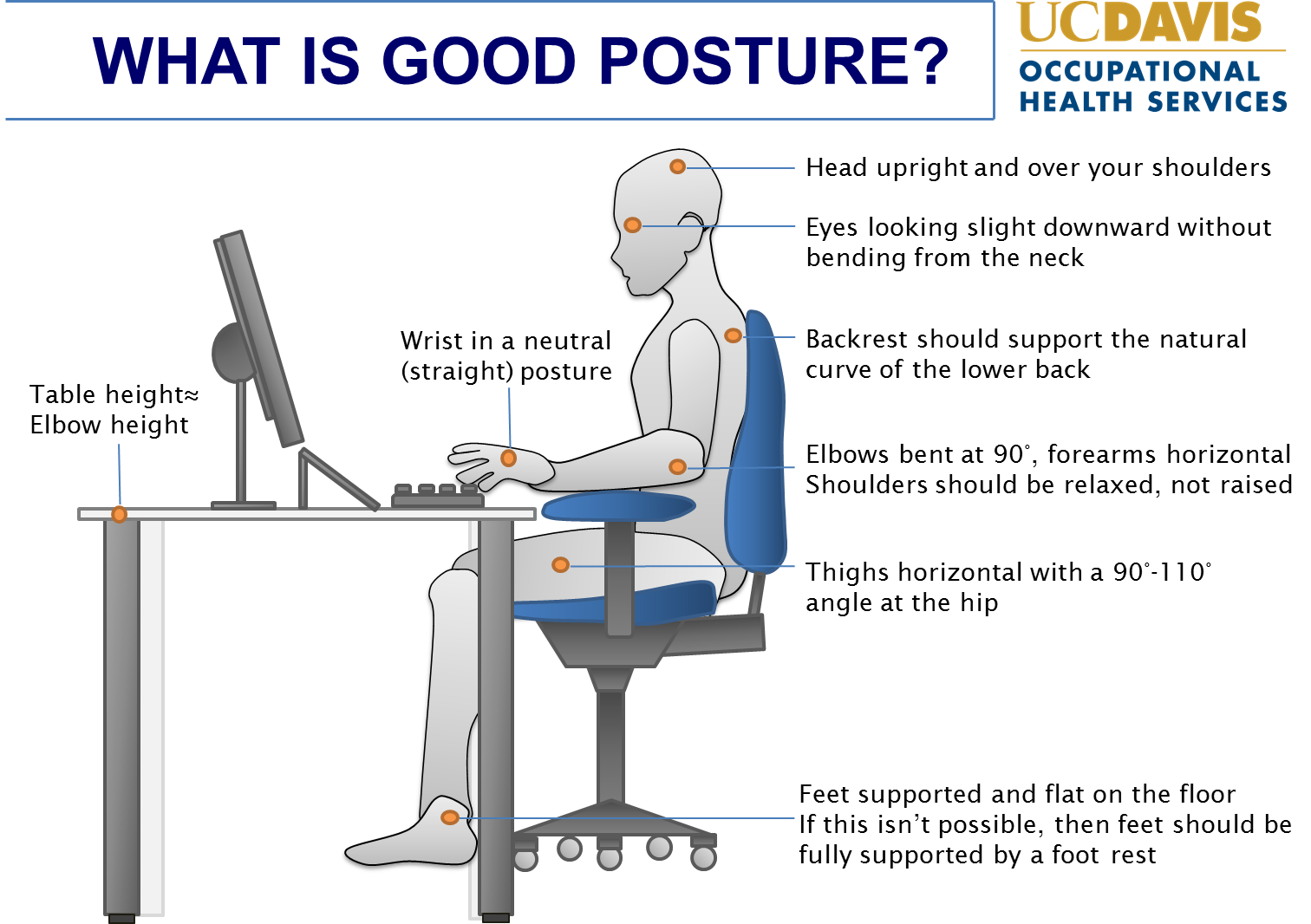
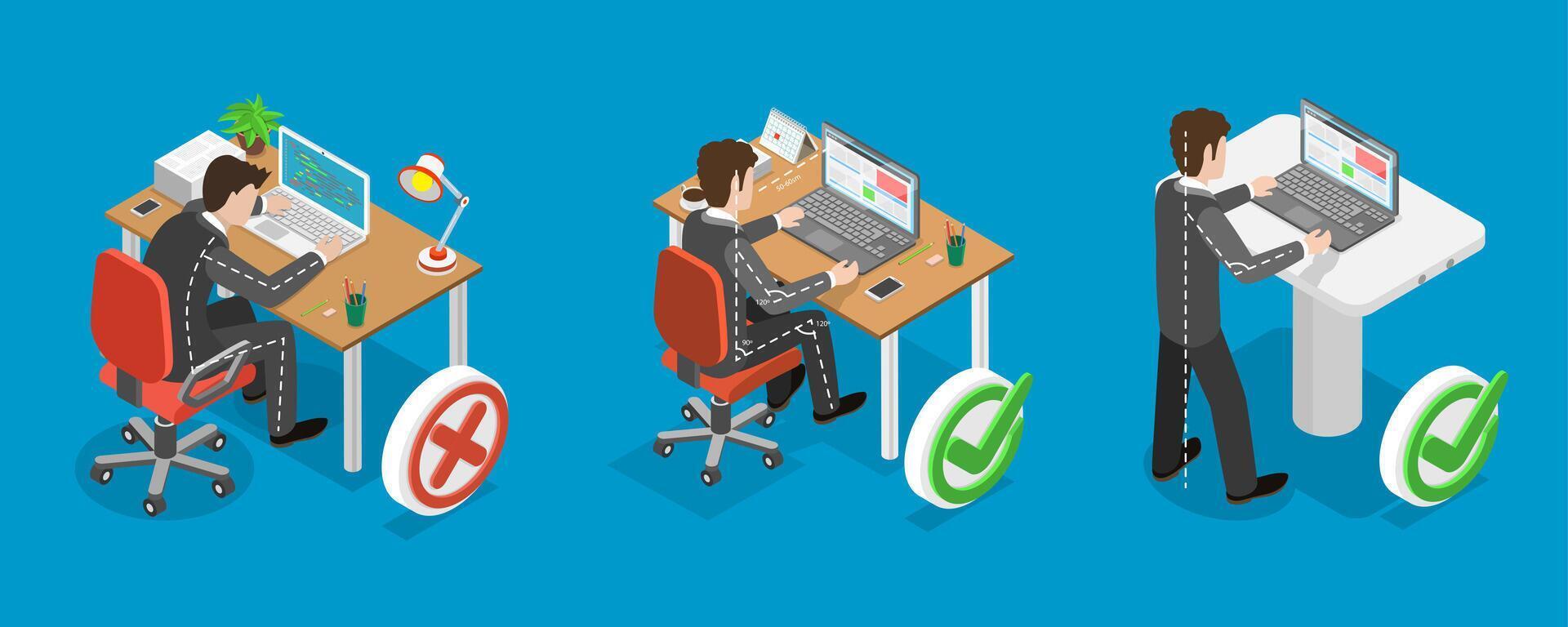
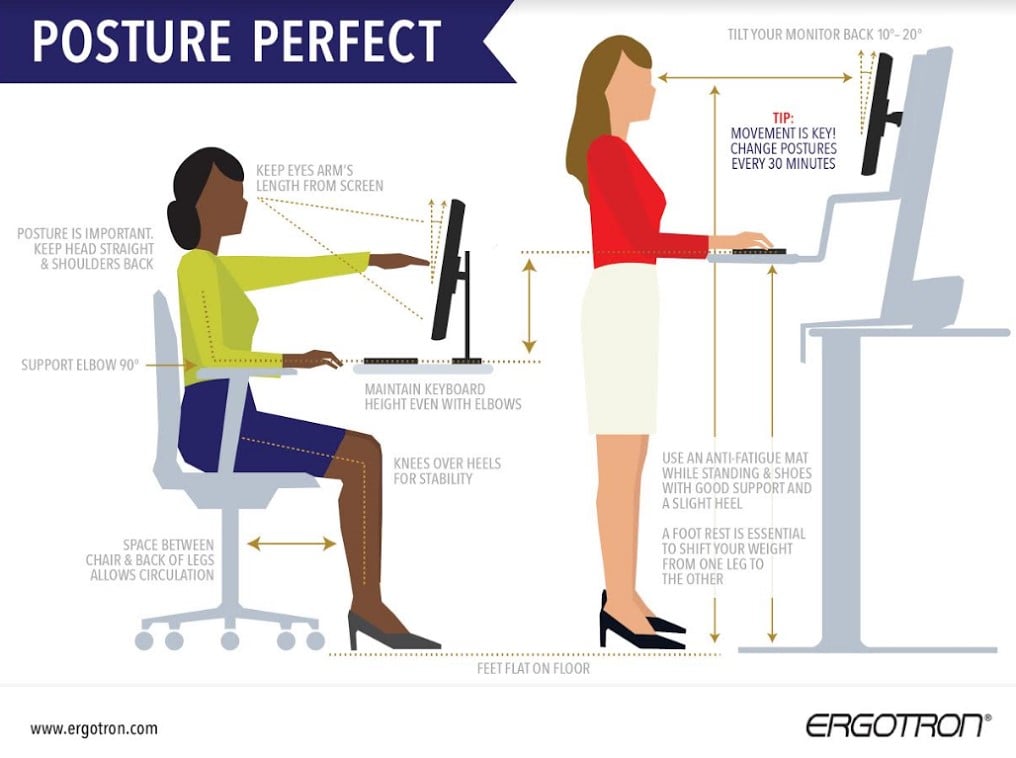
- Adjust your chair height:** Make sure your feet are flat on the floor with your knees at or below hip level.
- Position your monitor correctly:** Place the screen directly in front of you, at a distance of about 20-25 inches, and slightly below eye level.
- Take regular breaks:** Take short breaks every 30-60 minutes to stand up, stretch, and move around.
- Engage your core:** Keep your abdominal muscles engaged to support your spine and maintain good posture.
- Exercise regularly:** Regular exercise can help strengthen your back and neck muscles, improving your posture over time.
Exercises for Office Workers to Improve Posture
Exercise can help strengthen the muscles needed to maintain good posture and alleviate pain. Here are a few simple exercises to try at your desk:
- Shoulder rolls:** Roll your shoulders forward and backward in a circular motion to loosen and relax your shoulder muscles.
- Neck stretches:** Gently tilt your head to the side, bringing your ear towards your shoulder, and hold for 10-15 seconds.
- Chest stretches:** Place your hands behind you on your desk and lean back, stretching your chest and shoulders.
- Upper back stretches:** Place your hands behind you on your desk and interlock your fingers, stretching your upper back and shoulders.
- Seated twists:** Twist your torso to one side, keeping your feet and hips facing forward, and hold for 10-15 seconds.
Posture Correction Tools for Office Workers
There are many tools available to help improve your posture, from ergonomic chairs to back bracing devices. Here are a few options:
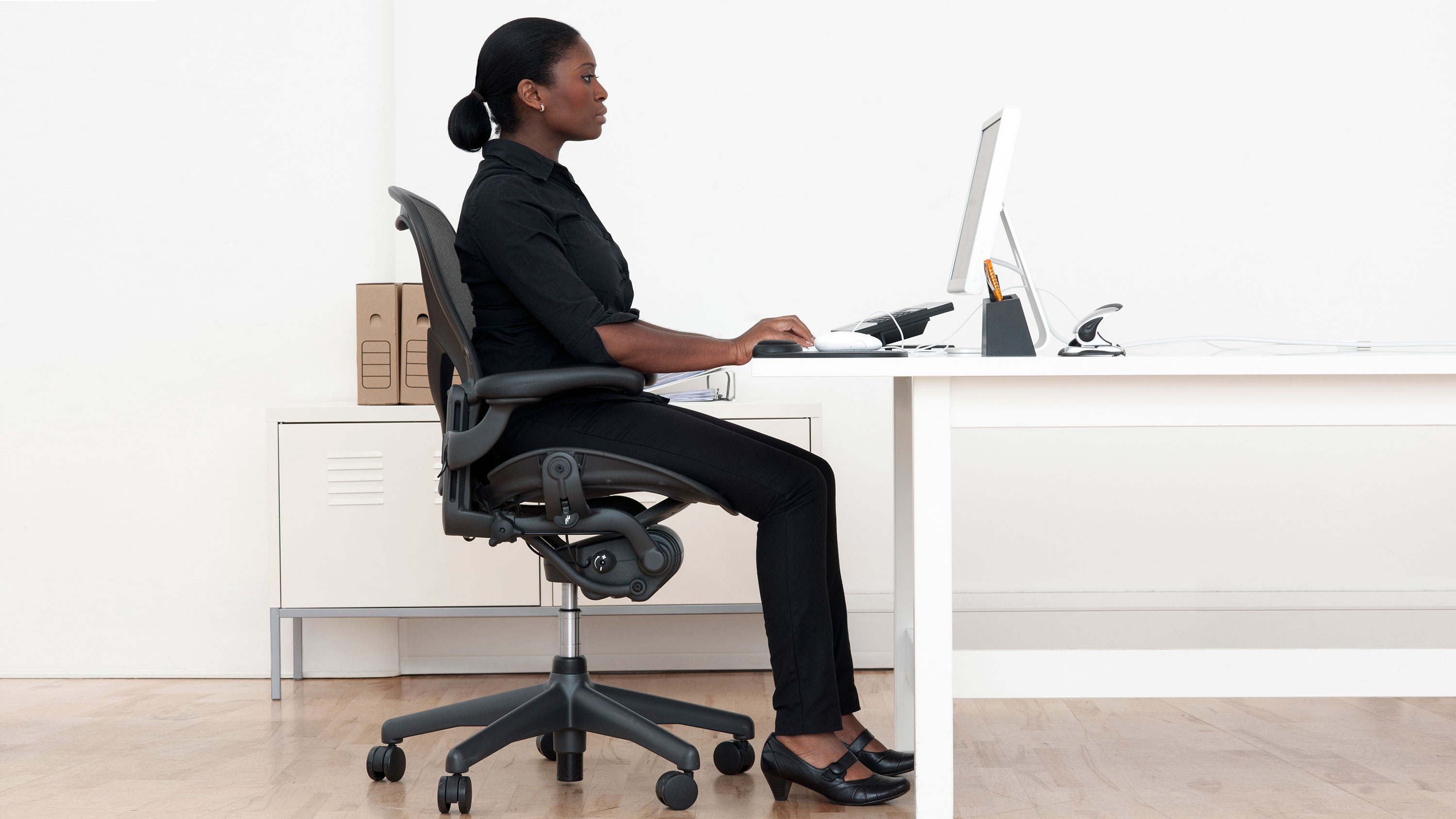
- **Ergonomic chairs:** Consider investing in an ergonomic chair that provides lumbar support and adjustable height settings.
- **Back bracing devices:** Certain devices, such as posture correctors and back braces, can help support and correct your posture.
- **Exercise balls:** Sitting on an exercise ball can help engage your core muscles and maintain good posture.
Conclusion
Applying posture correction tips and exercises to your daily routine can significantly improve your overall well-being and productivity. By avoiding the dangers of poor posture and incorporating simple corrections into your workday, you can maintain a healthy and comfortable work environment.
Today, try incorporating some of these posture correction tips into your work routine and take the first step towards a pain-free and healthy workday!