Explainable AI Terms Glossary: A Comprehensive Resource for Beginners and Experts
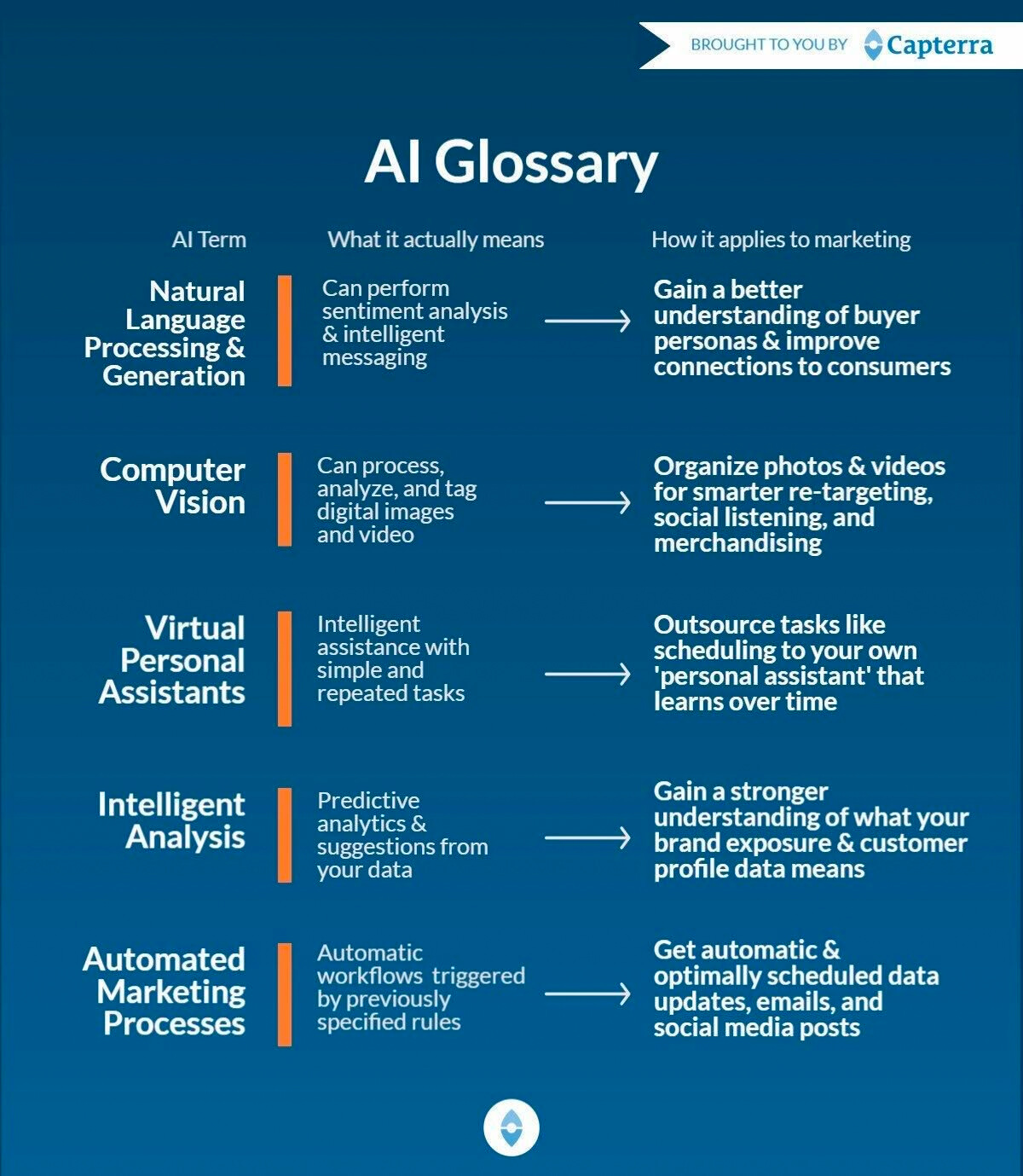
Artificial intelligence (AI) has become an integral part of our daily lives, from virtual assistants to self-driving cars. As the field continues to evolve, it's essential to understand the underlying concepts and terminology used in AI. This explainable AI terms glossary is a comprehensive resource for beginners and experts alike, covering over 200 essential AI terms and concepts explained clearly and concisely.
What is Explainable AI (XAI)?
Explainable AI (XAI) is a field of research that focuses on making the outputs and decision-making processes of machine learning algorithms transparent, interpretable, and trustworthy for human users. By addressing the inherent opacity of complex models, XAI facilitates intellectual oversight over AI algorithms, providing humans with the ability to understand the reasoning behind decisions or predictions made by AI systems.
Key AI Terms to Know
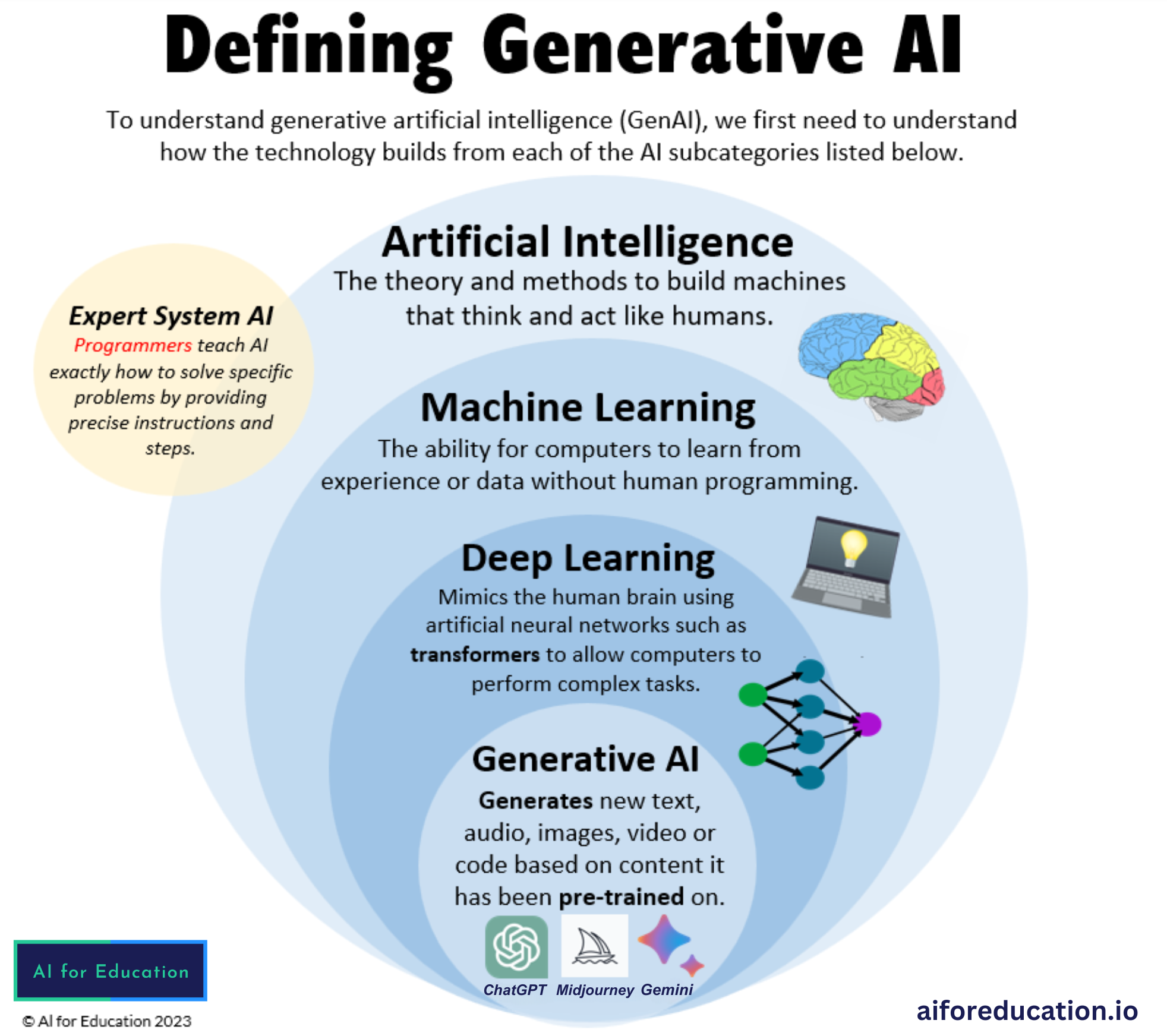
- Artificial Intelligence (AI): Refers to systems or machines that mimic cognitive functions like learning, reasoning, and problem-solving to perform tasks that typically require human intelligence.
- Deep Learning (DL): A subset of machine learning that uses neural networks with multiple layers to analyze and process complex data.
- Large Language Model (LLM): A type of AI model that is trained on vast amounts of text data to generate human-like responses to input queries.
- Generative Adversarial Networks (GANs): A type of AI model that consists of two neural networks that compete with each other to generate new, synthetic data samples.
- Neural Network: A model inspired by the human brain, consisting of interconnected layers of nodes (like neurons) that work together to process and analyze complex data.
- Supervised Learning: A type of machine learning where the AI model is trained on labeled data to learn the relationship between inputs and outputs.
- Unsupervised Learning: A type of machine learning where the AI model is trained on unlabeled data to identify patterns and relationships.
- Reinforcement Learning: A type of machine learning where the AI model learns by interacting with an environment and receiving rewards or penalties for its actions.
- Transfer Learning: A technique where a pre-trained AI model is fine-tuned for a specific task by adjusting its weights and biases.
- Explainable AI (XAI): A field of research that focuses on making AI models transparent, interpretable, and trustworthy.
- Interpretable AI (IA): A field of research that focuses on making AI models transparent and explainable.
- Autoencoders: A type of neural network that is used for dimensionality reduction, anomaly detection, and generating new data samples.
- Word Embeddings: A technique used in natural language processing to represent words as vectors in a high-dimensional space.
- Transformers: A type of AI model that uses self-attention mechanisms to analyze complex data and generate human-like responses.
Applications of Explainable AI

Explainable AI has numerous applications in various industries, including healthcare, finance, and education. Some of the key applications of XAI include:
- Medical Diagnosis: XAI can help diagnose diseases by analyzing medical images, patient data, and medical literature.
- Financial Risk Analysis: XAI can help identify potential risks and anomalies in financial data, enabling more informed decision-making.
- Educational Planning: XAI can help personalize education by analyzing student performance, learning styles, and interests.
- Customer Service: XAI can help analyze customer feedback, sentiment, and behavior to improve customer service and satisfaction.
Conclusion
This explainable AI terms glossary provides a comprehensive resource for beginners and experts alike to understand the terminology and concepts used in AI. By making AI models transparent, interpretable, and trustworthy, XAI has numerous applications in various industries, from healthcare to finance and education. As AI continues to evolve, it's essential to stay ahead of the curve and understand the underlying concepts and terminology used in AI.
Additional Resources
For more information on explainable AI and its applications, check out the following resources:


.png "Comprehensive AI Glossary: 200 Essential Artificial Intelligence Terms ...")