Ergonomic Tips for Back Pain: Creating a Healthy and Comfortable Workspace
Back pain is a common complaint among office workers, and it's often caused by poor posture, inadequate ergonomic setup, or prolonged sitting. However, there are simple and effective ways to prevent back pain and maintain a healthy spine. In this article, we'll explore some essential ergonomic tips for back pain, helping you to create a comfortable and safe workspace.
Why Ergonomics Matter for Spinal Health
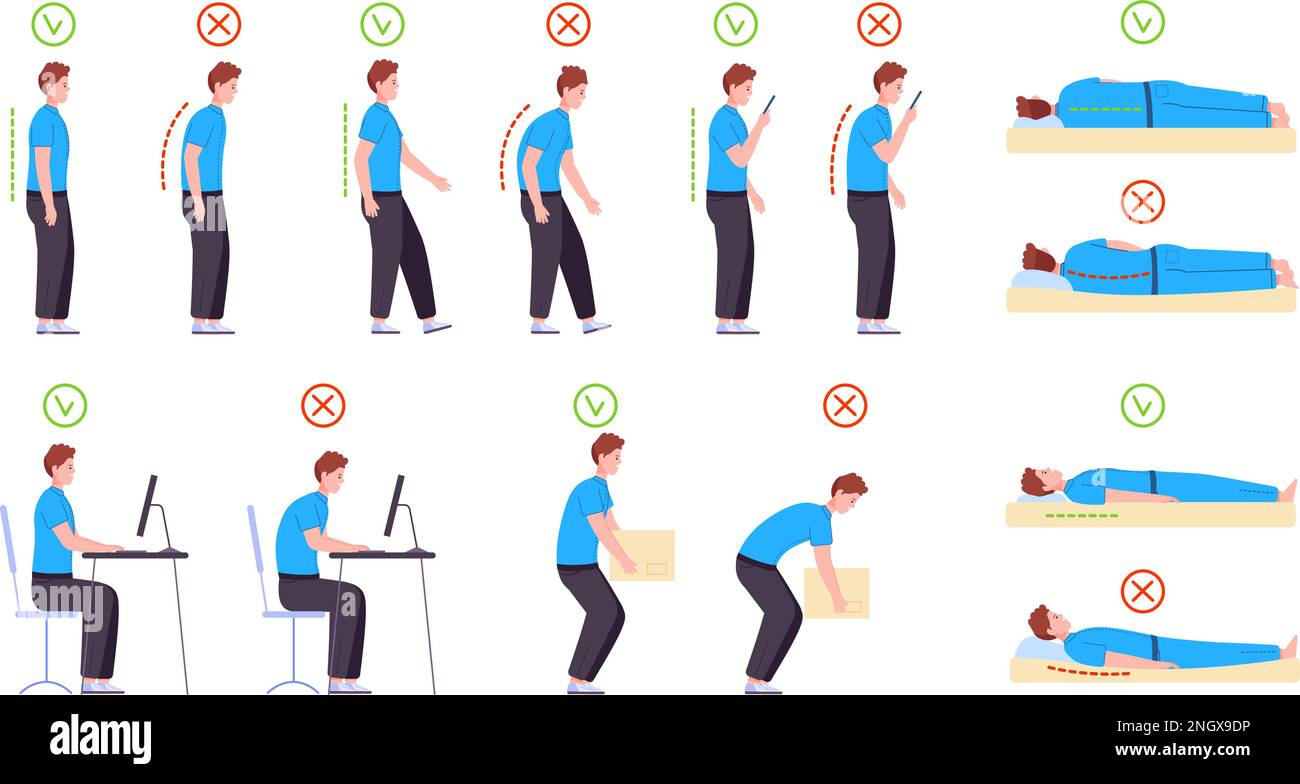
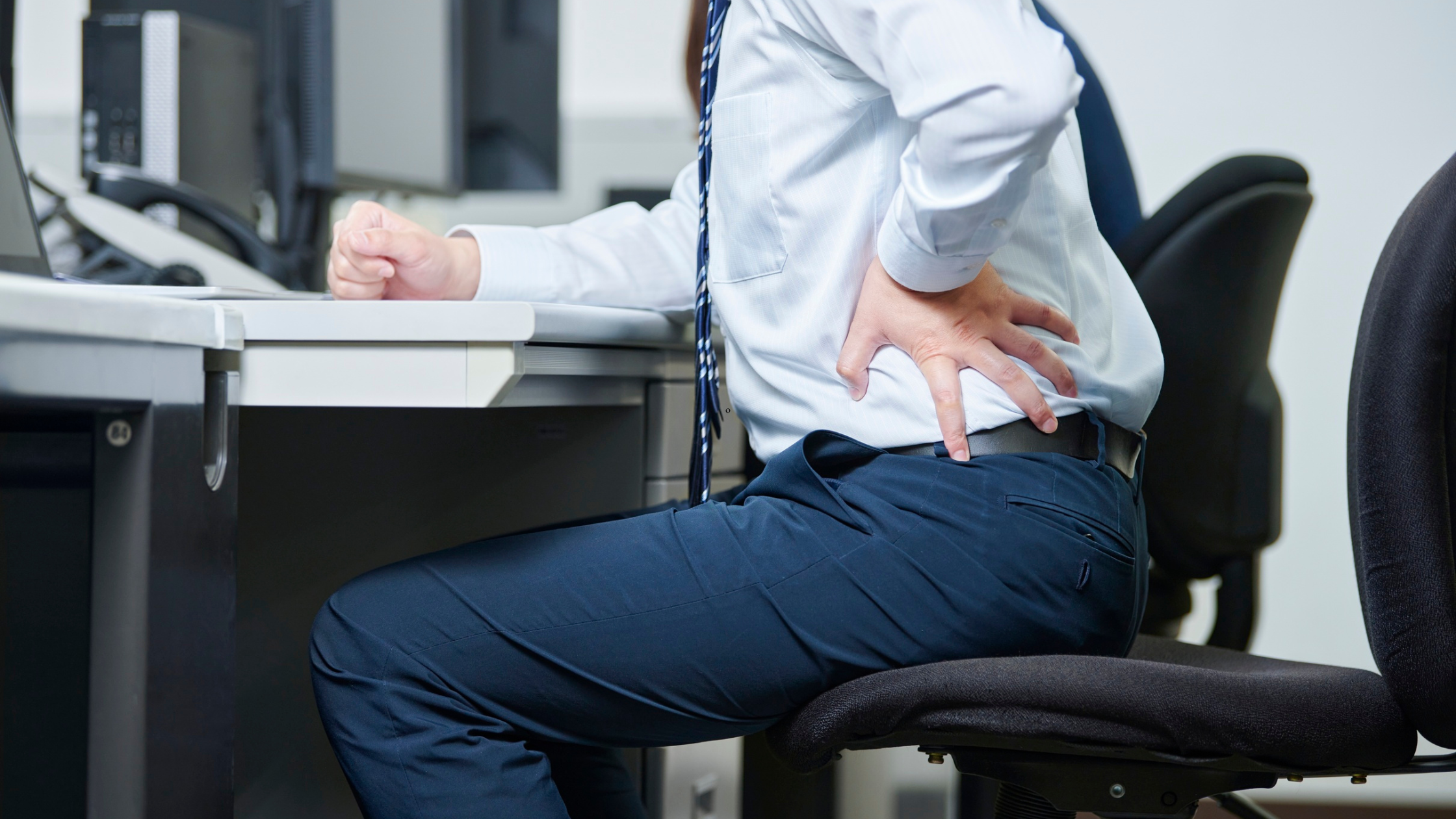
Back pain and musculoskeletal disorders are common among desk workers due to poor workplace ergonomics. Understanding the connection between ergonomics and spinal health is crucial for preventing discomfort and long-term injury. When your workspace is designed with ergonomics in mind, you're more likely to experience reduced stress, better posture, and improved overall well-being.
Improving Ergonomic Setup: Chair Height, Equipment Spacing, and Monitor Placement
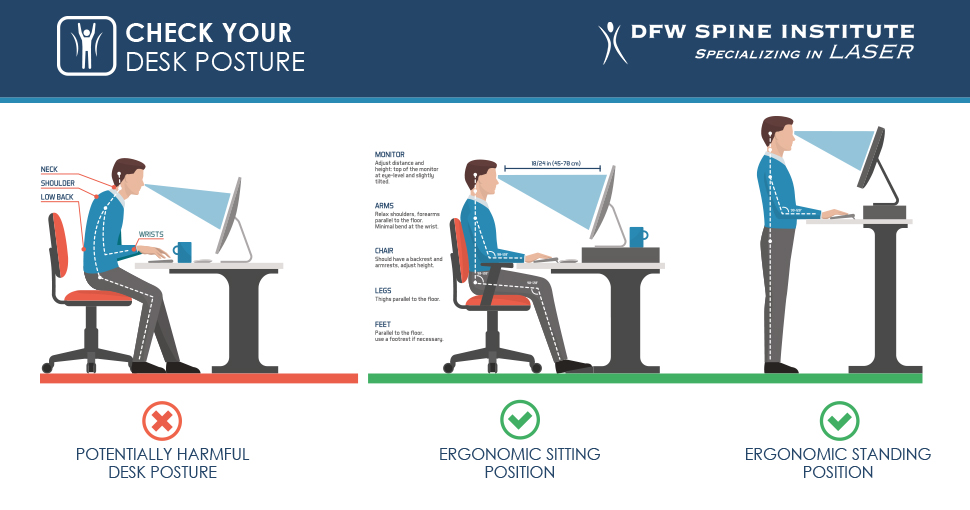
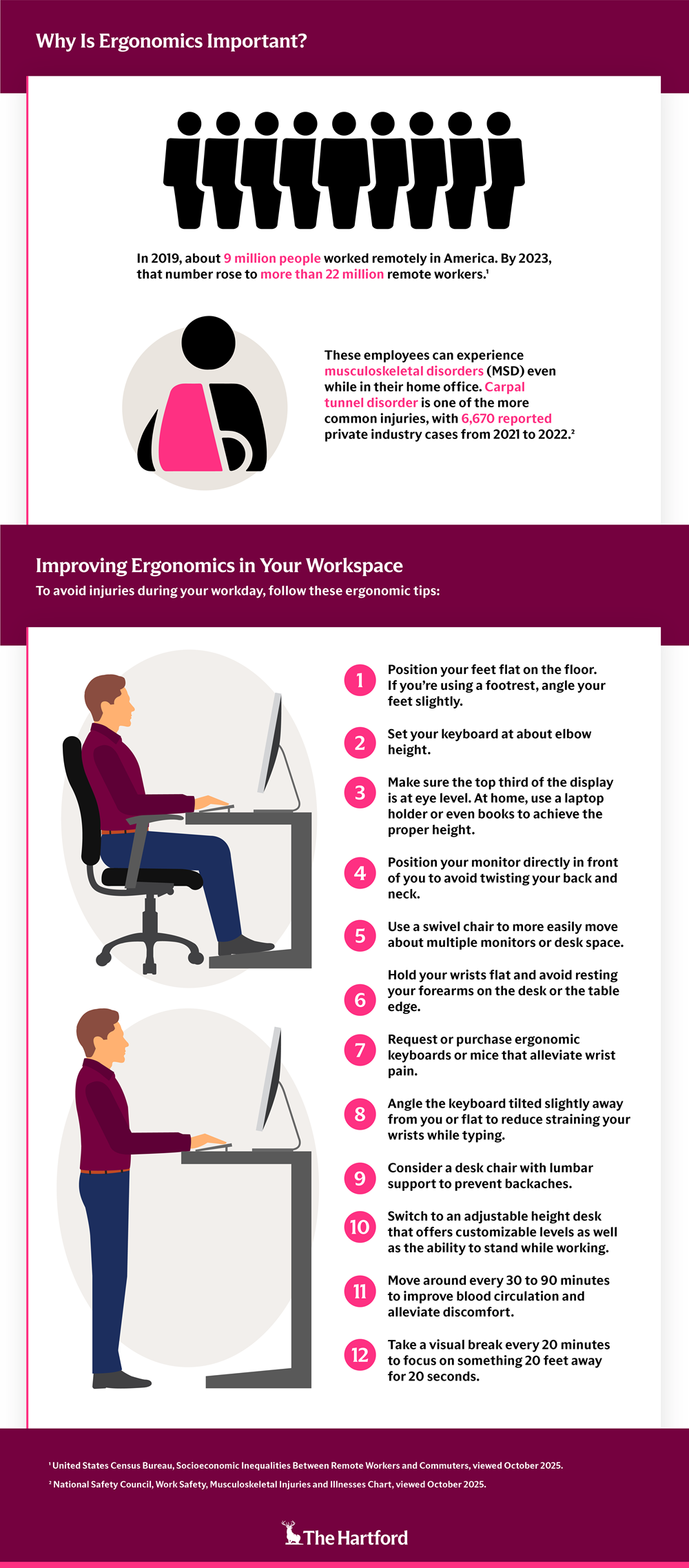
When it comes to preventing back pain, proper office ergonomics are essential. Adjusting your chair height, equipment spacing, and monitor placement can significantly reduce discomfort and stress on your spine. Here are some key considerations for an ergonomic setup:
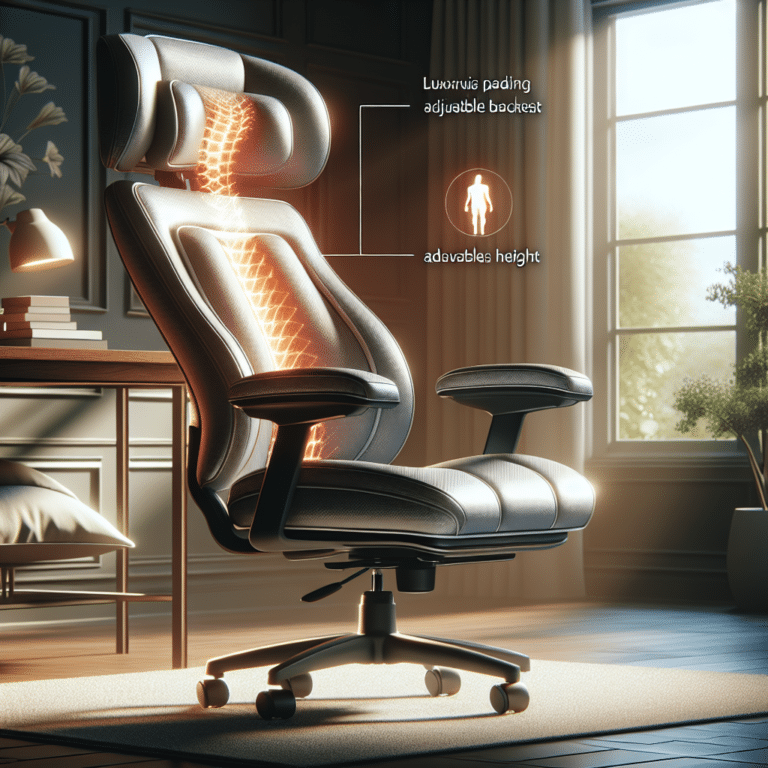
- Chair Height: Adjust your chair to a height that allows your feet to rest flat on the floor or a footrest, with your knees at or below hip level.
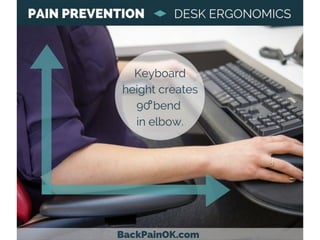
- Equipment Spacing: Ensure that your keyboard, mouse, and monitor are at comfortable distances to avoid straining your neck and back.
- Monitor Placement: Place your monitor directly in front of you, at a distance of about 20-25 inches, and at a height that allows you to gaze slightly downward.
Posture Habits and Stretches for a Healthy Back
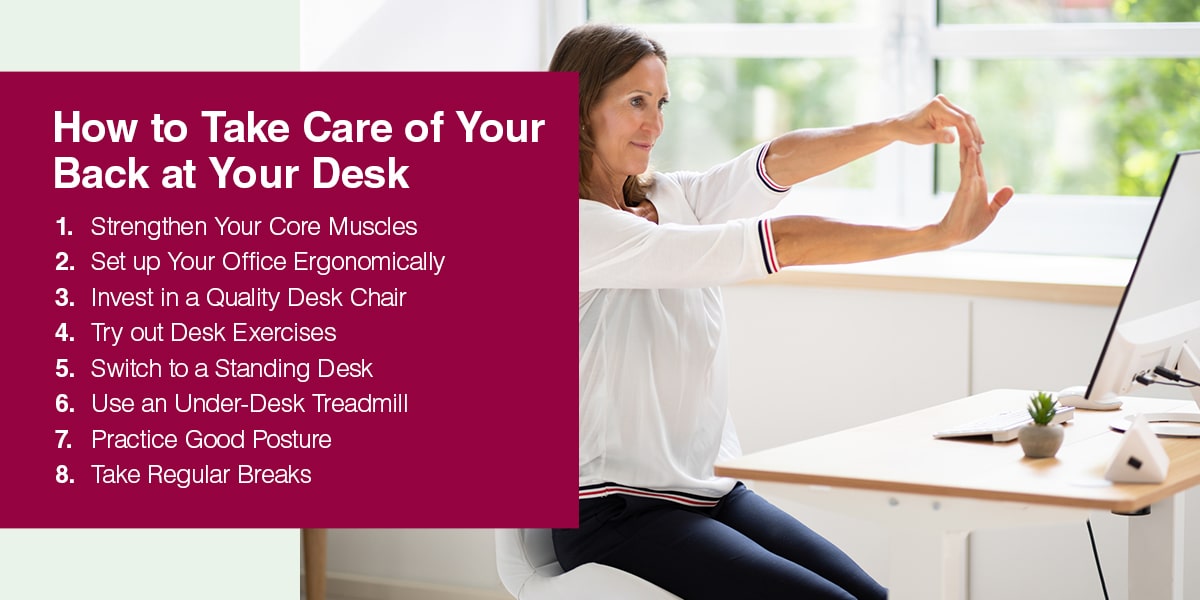
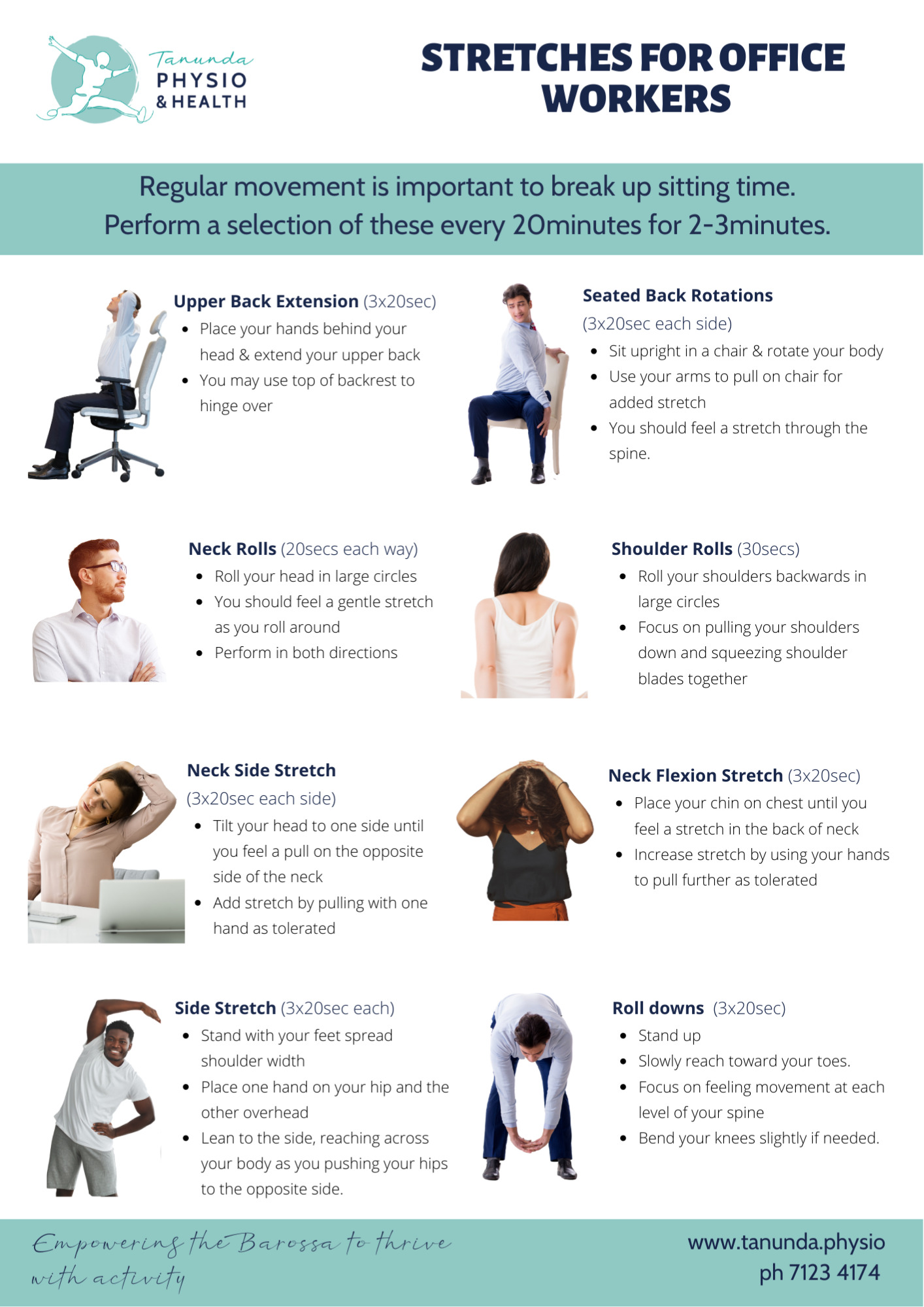
Proper posture habits and regular stretching can go a long way in preventing back pain. Here are some simple tips to maintain good posture and alleviate tension in your back:
- Thoracic Extension: Stand or sit with your shoulders relaxed, chest expanded, and shoulders rolled back.
- Shoulder Blade Squeeze: Squeeze your shoulder blades together to tighten and relax your upper back.
- Lower Back Stretch: Stand with your feet shoulder-width apart, then bend to one side, stretching your lower back and hips.
- Neck Stretch: Slowly tilt your head to the right, bringing your ear towards your right shoulder, and hold for 30 seconds.
Safe Work Practices and Maintenance
Preventing back pain and maintaining a healthy back requires ongoing effort and attention. Here are some safe work practices and maintenance tips to keep in mind:
- Take Regular Breaks: Every 30-60 minutes, stand up, stretch, and move around to reduce prolonged sitting and maintain muscle flexibility.
- Adjust Your Workspace: Periodically assess and adjust your workspace to accommodate changes in your body and work style.
- Stay Hydrated: Drink plenty of water to maintain spinal health and reduce muscle fatigue.
- Exercise Regularly: Engage in regular exercise, such as yoga, Pilates, or other low-impact activities to strengthen your core and improve spinal flexibility.
Conclusion: Creating a Healthy and Comfortable Workspace
By implementing these ergonomic tips for back pain, you can create a healthy and comfortable workspace, reducing the risk of discomfort, stress, and long-term injury. Remember to prioritize proper posture habits, regular stretching, and safe work practices to maintain a strong and healthy back. Take the first step towards a more comfortable and productive work environment today!