B2B Sales Enablement: Unlocking Revenue Growth through Aligned Teams and Smart Content
Effective sales enablement is no longer a luxury, but a necessity for businesses to stay competitive in today's fast-paced, digital marketplace. By providing sales teams with the information, content, and tools they need to succeed, organizations can drive revenue growth and outperform their competitors. In this article, we'll delve into the world of B2B sales enablement, exploring its importance, key strategies, and best practices to boost sales performance.
What is B2B Sales Enablement?
Sales enablement is the process of empowering sales organizations with the resources, tools, and training needed to engage potential buyers effectively. It involves providing sellers with the information, content, and support they require to navigate the complex selling process, build strong relationships with customers, and ultimately close deals. B2B sales enablement focuses on supporting sales teams in their interactions with decision-makers at other businesses, making it a critical aspect of any B2B sales strategy.
The Importance of B2B Sales Enablement
By implementing a well-executed sales enablement strategy, organizations can:
- Improve sales effectiveness and efficiency
- Enhance the buyer-seller experience
- Increase revenue growth and profitability
- Close the gap between initial touch points and closed deals
- Reduce sales ramp time and improve sales team productivity
The 5 Core Pillars of B2B Sales Enablement

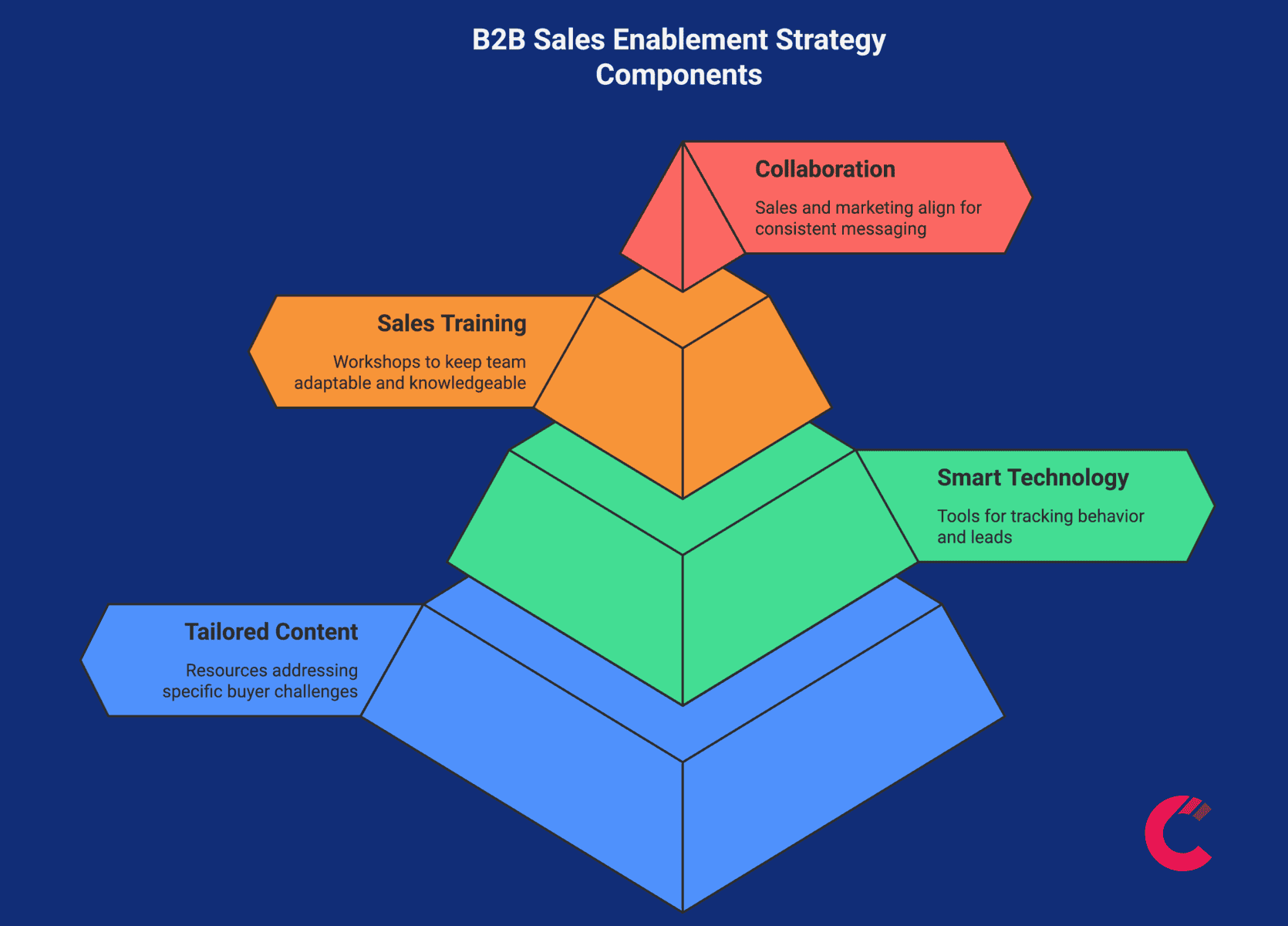
A successful B2B sales enablement program is built on five core pillars:
- Organization: Establishing a sales enablement function that is accountable for driving sales performance and revenue growth.
- Content: Developing and managing sales assets, such as battlecards, interactive demos, and ROI calculators, that support sales teams in their interactions with buyers.
- Coaching and Training: Providing ongoing coaching, feedback, and training to sales teams to improve their sales skills and performance.
- Process: Establishing and optimizing sales processes to ensure consistency and efficiency in sales interactions.
- Technology: Leveraging sales enablement tools and platforms to support sales teams in their daily activities.
Best Practices for Implementing a B2B Sales Enablement Strategy
To drive revenue growth and sales performance, organizations should focus on the following best practices:
- Align the sales and marketing teams to ensure a cohesive and consistent message.
- Develop a content strategy that meets the needs of sales teams and supports the buyer's journey.
- Establish clear KPIs and metrics to measure sales enablement effectiveness.
- Provide ongoing coaching and training to sales teams to improve their skills and performance.
- Optimize sales processes to enhance efficiency and reduce sales ramp time.
Conclusion
B2B sales enablement is a critical strategic capability for organizations operating in today's complex B2B marketplace. By providing sales teams with the information, content, and tools they need to succeed, organizations can drive revenue growth, improve sales effectiveness, and outperform their competitors. By implementing a well-executed sales enablement strategy, organizations can unlock the full potential of their sales teams and achieve their business objectives.






.png "Reimagining sales success: the science of Sales Enablement")