Streamlining Your Home Network: A Step-by-Step Guide to Google Wi-Fi Setup with Mobile App
The ever-changing landscape of home automation and internet connectivity has given birth to numerous innovative solutions that simplify our lives. Google Wi-Fi setup with mobile app is one such innovative solution that allows you to control and manage your home network with unprecedented ease. In this article, we will walk you through a comprehensive step-by-step guide on how to set up Google Wi-Fi with the help of the Google Home app.
Getting Started
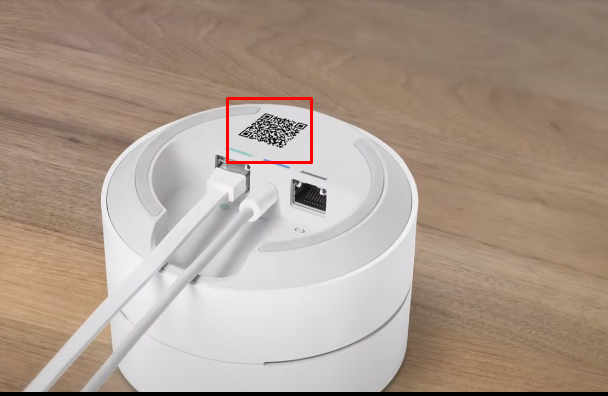
To begin with, make sure you have the necessary equipment. This includes a Google Wi-Fi router, Ethernet cable, and power adapters for each Wi-Fi point. Although the setup process is relatively straightforward, some Internet Service Providers (ISPs) might use VLAN tagging, which may require additional equipment for Google Wi-Fi to work efficiently. Check with your ISP to determine if this applies to you.
Ensure that you have a compatible mobile device, either an Android or an iOS device, with the latest version of the Google Home app installed. This app is available on both Google Play Store and Apple App Store.
Setting Up Google Wi-Fi with Mobile App
The Google Home app is not only used for setting up Google Wi-Fi but also for managing your network settings, parental controls, and running speed tests. If you're planning to migrate your existing Google Wi-Fi devices to the Google Home app, be aware that this might change how you manage your devices, and it's a good idea to check the latest updates and features on the app.
Adding Devices to Your Network

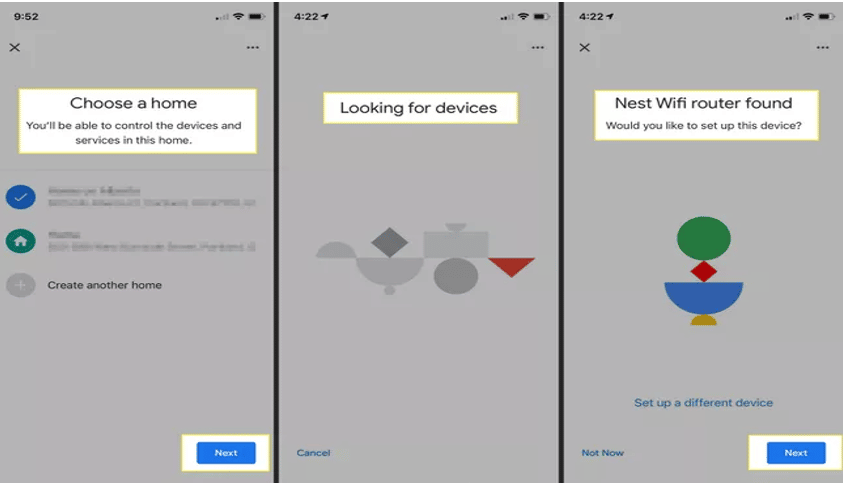
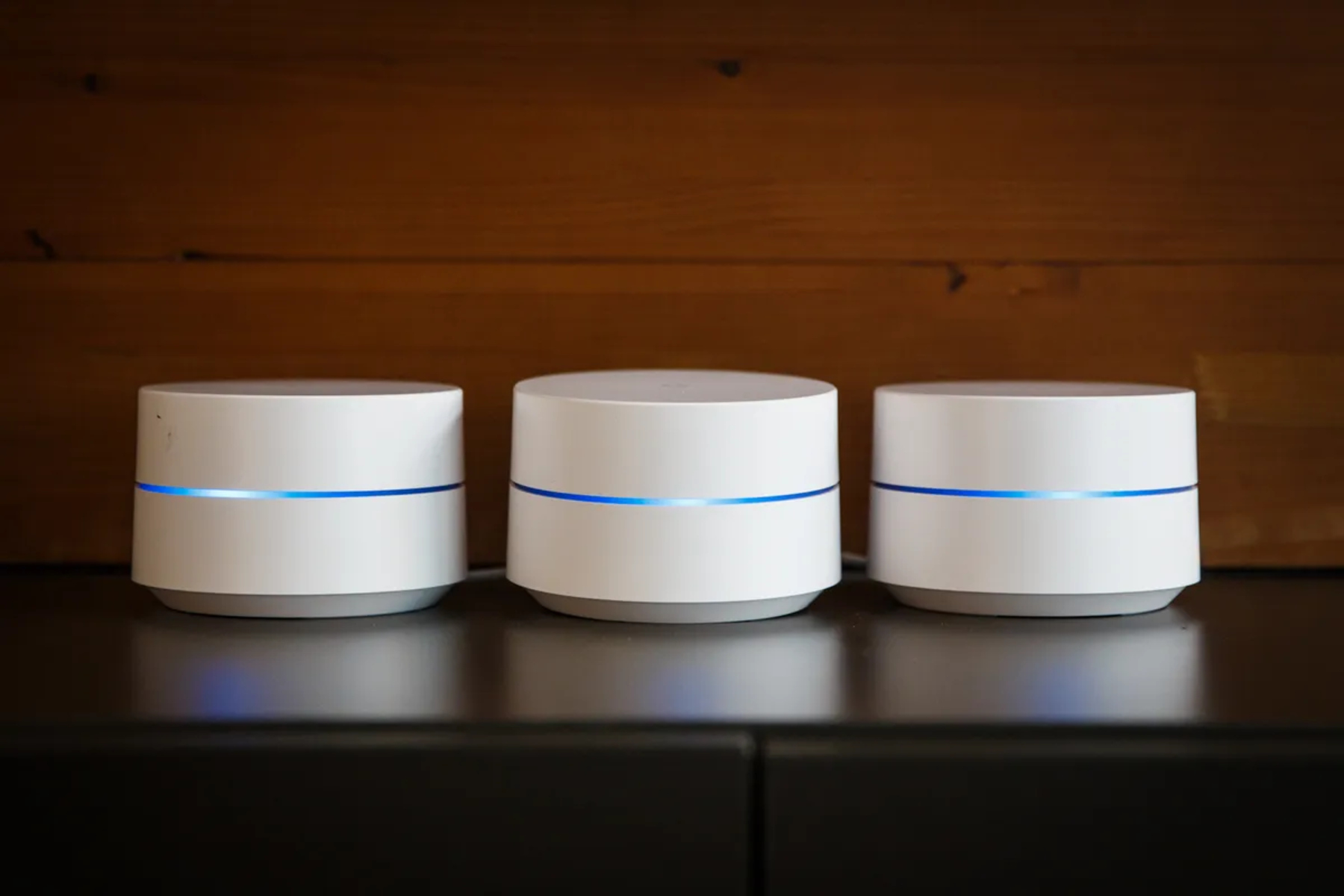
When you decide to add more devices to your network, you can add Google Wi-Fi and Nest Wi-Fi points to your network at any time. All additional Wi-Fi devices act as points in the mesh network. Each added device has to be set up through the Google Home app. The app should automatically detect the device, and you'll be prompted to confirm the setup by tapping "Yes" to continue.
Power Considerations
It's essential to consider the placement of your Wi-Fi points for optimal performance. Placing the primary Wi-Fi point in the center of your home is a good starting point, and you can add additional points in other areas where you need a strong signal. Ensure each Wi-Fi point has a stable power source to maintain uninterrupted connectivity.
Control and Management
One of the significant advantages of Google Wi-Fi is its seamless integration with the mobile app. With the app, you can visualize and manage your network in real-time, receiving alerts and notifications about any issues or outages. The app's intuitive interface also allows for easy control of advanced features such as Quality of Service (QoS) settings and guest network access.